


The phone conversation at the next desk, the printer in the corner, four conversations going on at once: In an open-plan office, noise quickly adds up to a constant source of stress. What many people underestimate is the impact on concentration, error rates, and well-being. Improving the room’s acoustics also improves working conditions—and often with minimal effort.
Why Noise in an Open-Plan Office Is a Structural Problem
Open-plan offices are designed to promote communication and collaboration. This is both their advantage and their greatest acoustic weakness. Sound travels unimpeded in open spaces, and hard floors and glass walls amplify it even further. The result is a constant noise level that, while rarely perceived as disturbingly loud, drains energy over time.
Human concentration is particularly sensitive to speech sounds. Even quiet background conversations place a strain on working memory because the brain automatically tries to process the content. Errors in cognitively demanding tasks increase significantly when exposed to noise. An acoustic problem is therefore not a comfort issue, but a quality issue.
On top of that, many employees are reluctant to identify noise as a problem. It’s considered normal to just tough it out in the office. Yet in many cases, the solution would be simpler than you might think.
People who work in an open-plan office every day get used to the noise, but the brain doesn’t. Concentration and energy levels suffer silently. Yet in most offices, the a can be solved without renovations—using measures that can be flexibly adapted and expanded as needed.
Solutions for Better Office Acoustics
There is no one-size-fits-all solution for acoustic problems in open-plan offices. Depending on the room size, how it’s used, and the budget, different measures are needed. The good news is that most of these can be implemented without renovations and with minimal effort. The key is to combine the right elements.
Acoustic Elements
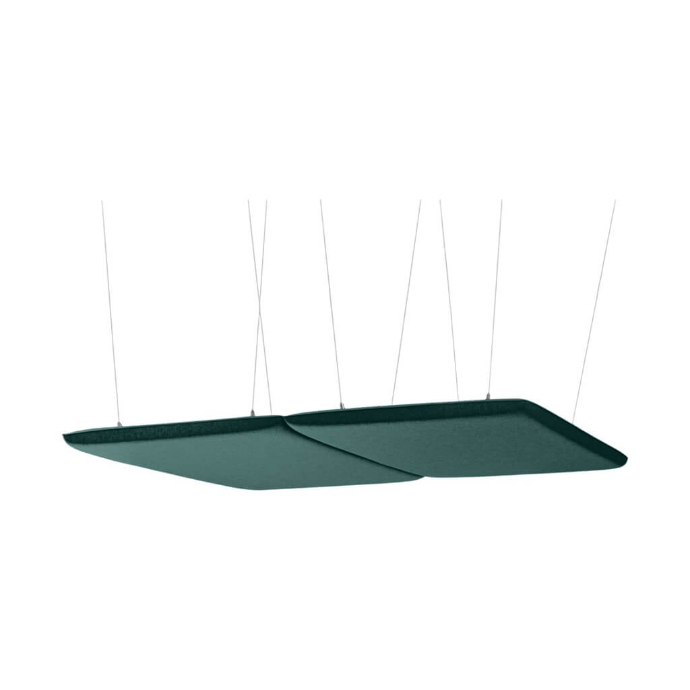
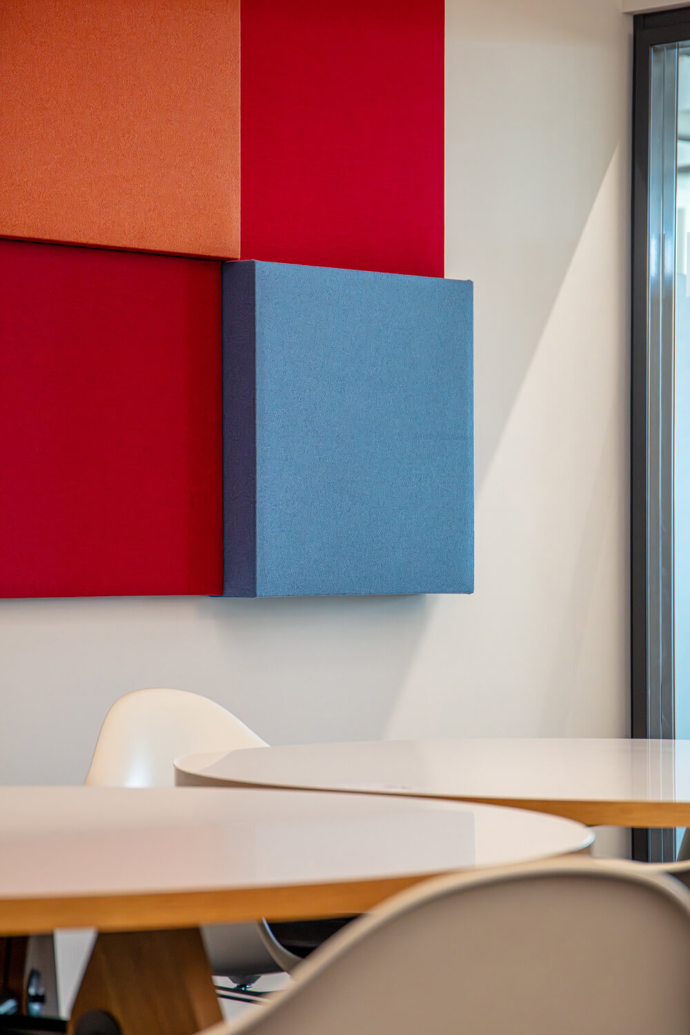
The first step in addressing poor office acoustics is to reduce reverberation—that is, the amount of time sound remains in the room. Acoustic panels on walls and ceilings absorb sound waves before they spread and amplify within the room. The result is a quieter, more pleasant indoor environment without altering the room’s appearance.
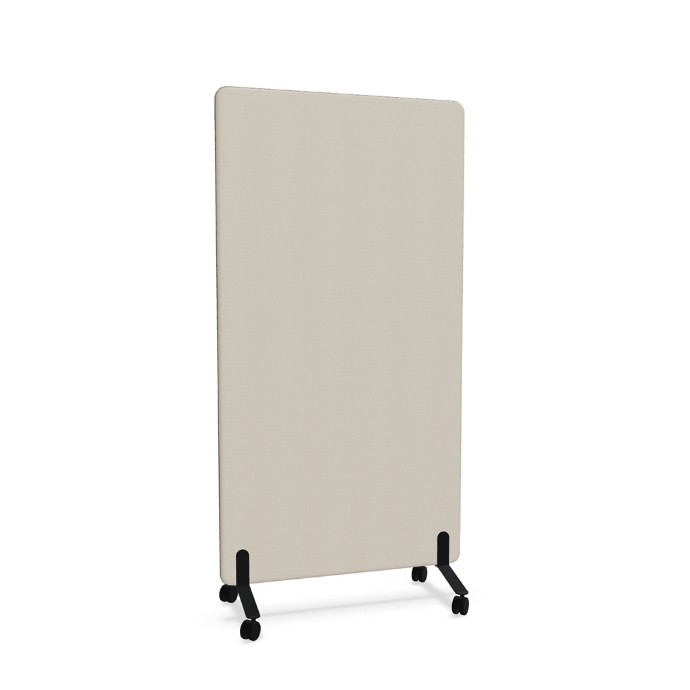
Freestanding acoustic walls take it a step further: They divide the space in a targeted manner and create acoustically quiet zones for focused work. They can be positioned flexibly and moved without any structural modifications. They provide a noticeable improvement, especially in large, echoey rooms.
Acoustic elements alone are often not enough in large, open-plan offices. In smaller rooms, however, even just a few panels or a freestanding acoustic wall can make a noticeable difference.

Partitions & Table Screens
Room dividers create structure in an open-plan office without requiring any structural modifications. Freestanding partitions divide the open-plan office into functional zones: a quiet area for concentration here, a space for teamwork there. Many models are equipped with sound-absorbing materials, thereby improving acoustics at the same time. Mobile versions can be moved and adapted to changing needs.
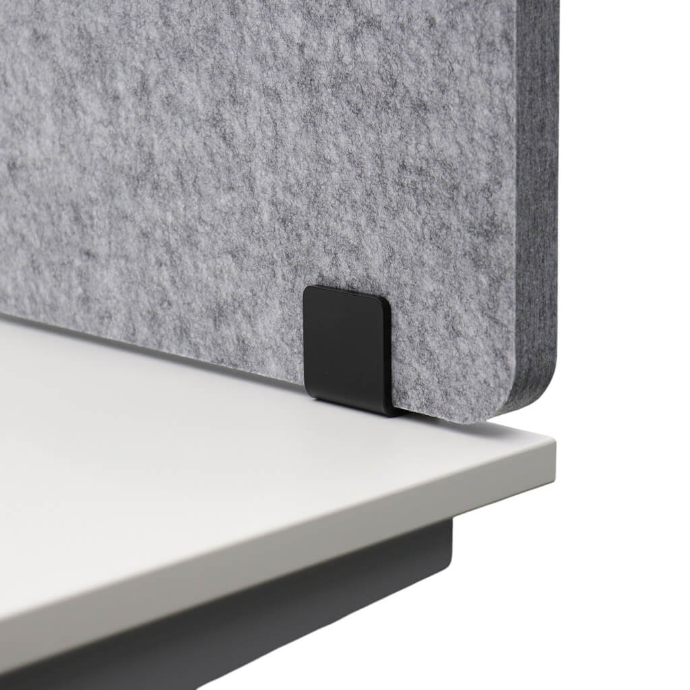
If you don’t want to make major changes to your workspace, desk partitions offer a simple, entry-level solution. They are mounted directly to the desk, dampen noise from the neighboring desk, and reduce visual distractions. They’re affordable, space-saving, and easy to install.
Room-in-Room Solutions
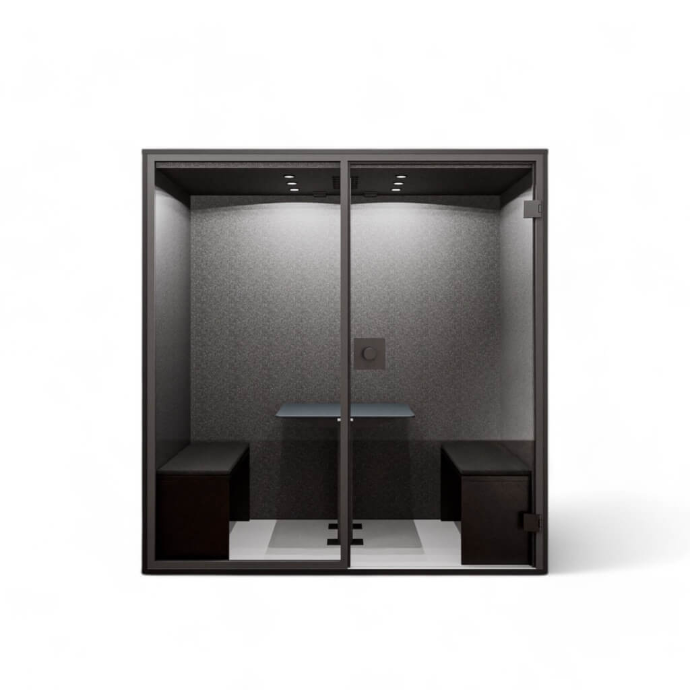
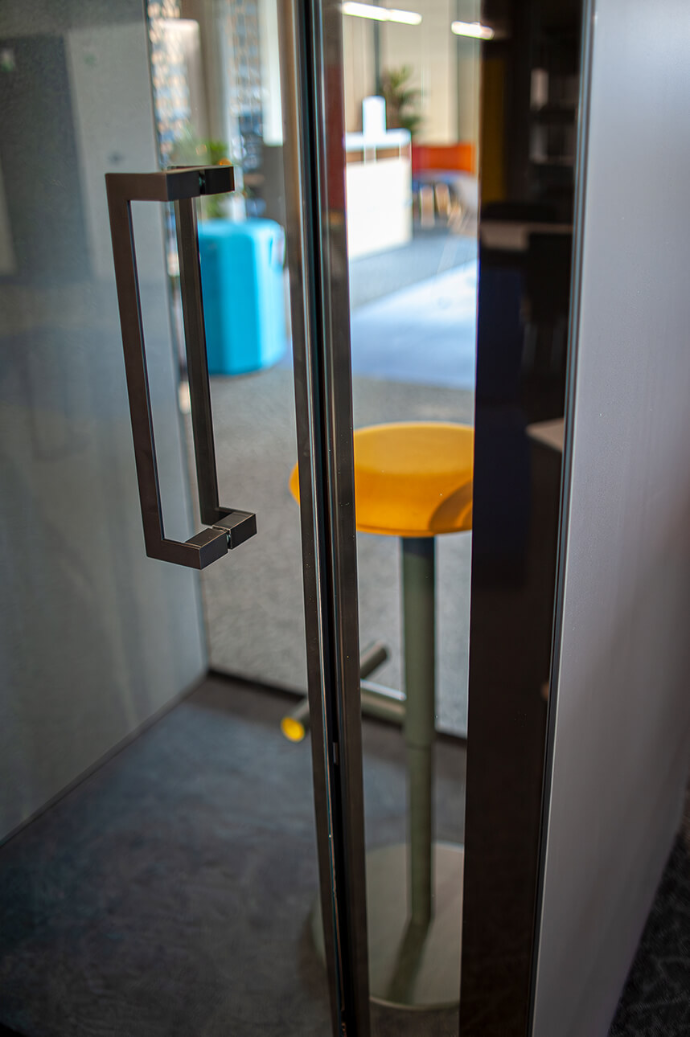
For certain activities, acoustic panels and partition walls aren't enough. Video conferences, confidential conversations, or tasks that require absolute concentration call for a true retreat. This is where phone booths and room-in-room systems come into play.
These booths are soundproof and can be integrated into existing office spaces without any structural modifications. They take up only a few square meters but provide a fully functional enclosed space. They are a practical solution, especially in offices without separate meeting rooms.
The investment often pays for itself faster than expected. When employees have to change rooms for every phone call or struggle with background noise every day, it costs them both work time and patience.
Room acoustics are not a luxury. They are one of the basic requirements for focused, productive work. Anyone who runs an open-plan office and has put off addressing this issue until now can find pragmatic and scalable solutions that can be implemented without renovations.