


Used furniture has long been more than just a cheap alternative. Nevertheless, there are still many persistent prejudices surrounding second-hand furniture. Many of these stem from a time when giving items a second life was still considered a temporary solution. Today, the reality is very different.
Here are the most common misconceptions—and what's really behind them.
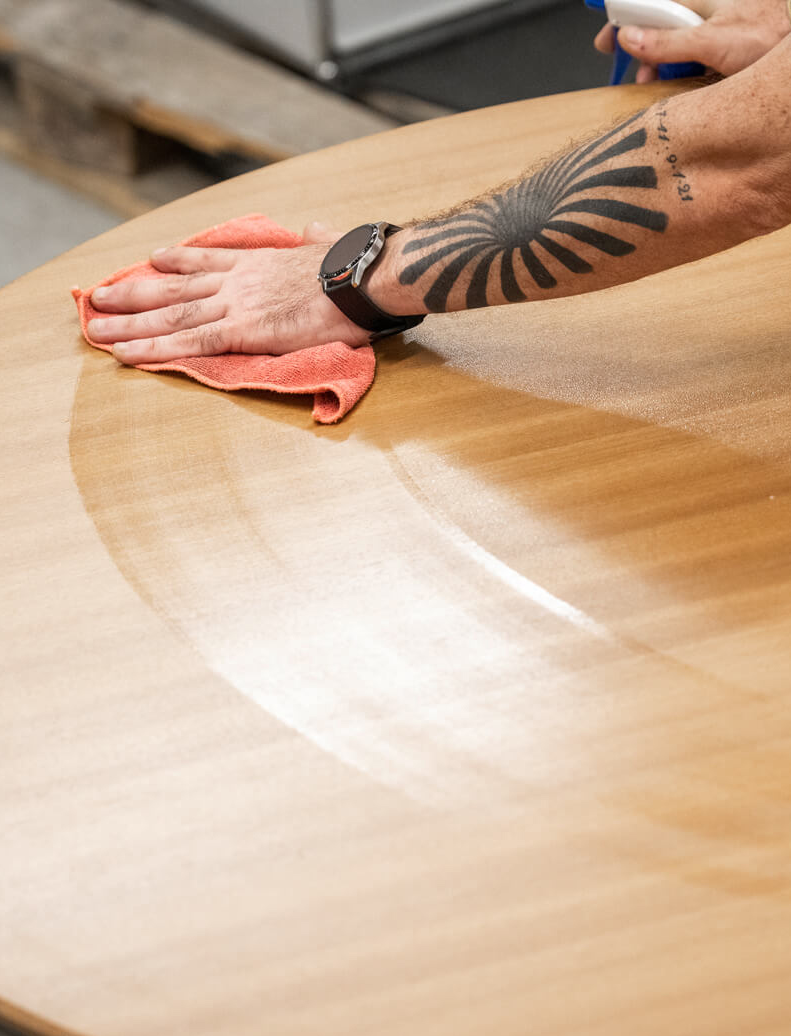
Used furniture is heavily worn
The term "used" is often automatically equated with "worn out" or "scratched." However, much secondhand furniture comes from company closures, relocations, or showrooms and often had only a short first life.
The decisive factor is not whether a piece of furniture is used, but rather its condition. Professional suppliers inspect, clean, and evaluate each piece of furniture transparently. This way, you know exactly what to expect. If you want to save money, choose well-used pieces. If you value a like-new appearance, you will also find suitable solutions.
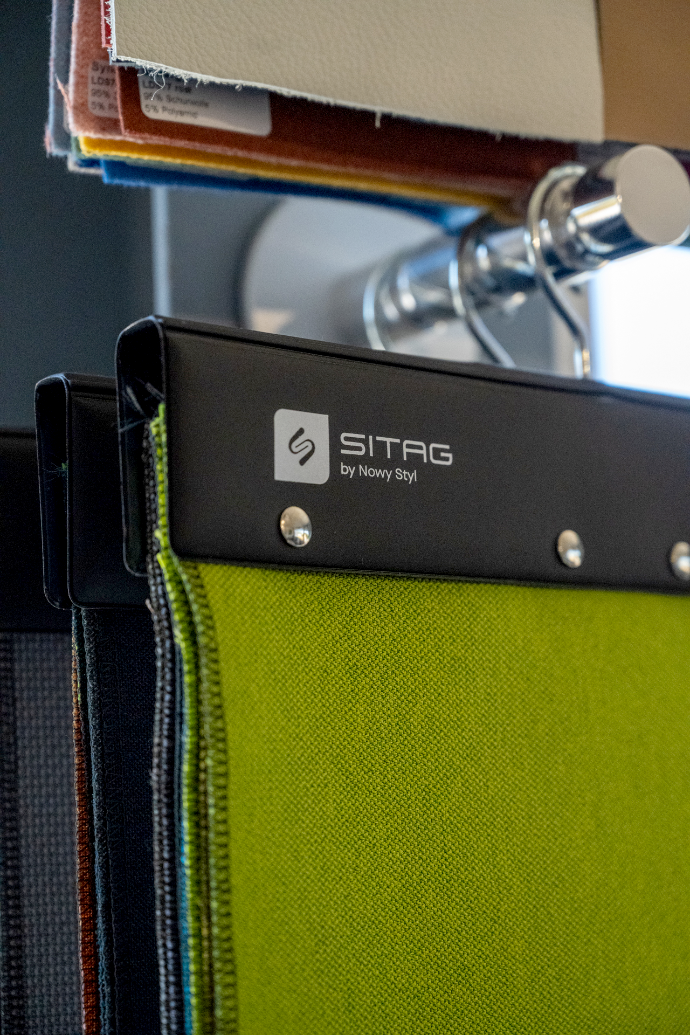
Used automatically means poor quality
Much office furniture is designed for long-term use. High-quality chairs, tables, and storage solutions do not lose their quality after just a few years.
Furniture from renowned manufacturers in particular is designed for long-term use. It is often not replaced because it is defective, but because circumstances change. For example, due to relocations or new workplace concepts. Quality is maintained. The life cycle is extended.
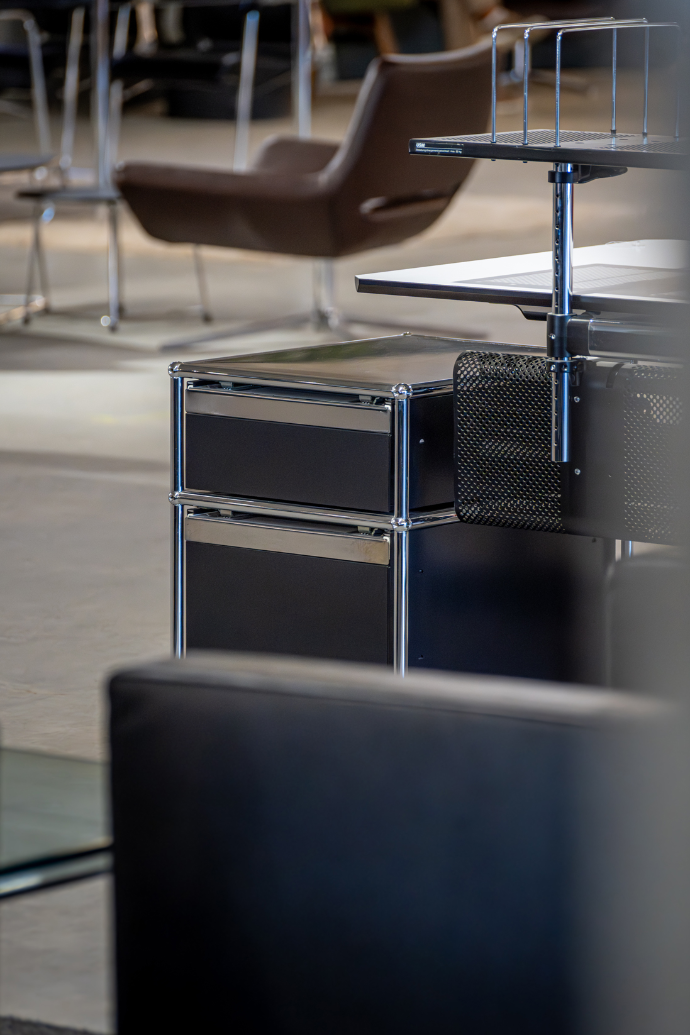
Used furniture looks old-fashioned
Old-fashioned, heavy, or outdated. This image persists. Yet timeless design classics show that good design lasts for decades. USM is a good example: the modular system has been a fixture in modern offices for decades and looks just as sleek and high-quality today as it did back then.
Many modular systems can be combined flexibly and fit easily into modern working environments, whether open-plan offices, start-ups, or home offices. The combination of new and used furniture in particular can give rooms character and individuality.
Professional. Predictable. Sustainable.
Secondhand furniture is a conscious decision, not a stopgap solution.

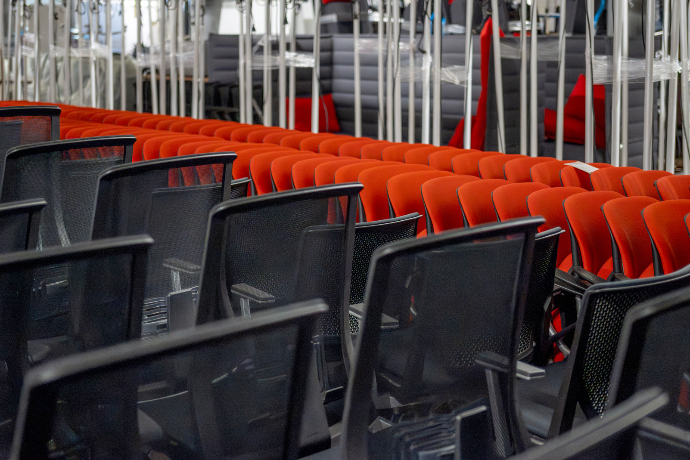
Identical office workstations only with new furniture?
A common concern with larger projects: secondhand means one-off items and a lack of planning security.
In practice, large quantities of furniture from company closures or restructuring measures enter the market. It is not uncommon to find several dozen or even several hundred identical workstations. In addition, many models from renowned manufacturers remain in the product range for years. This enables uniform, scalable, and predictable office furnishings, even with second-hand furniture.
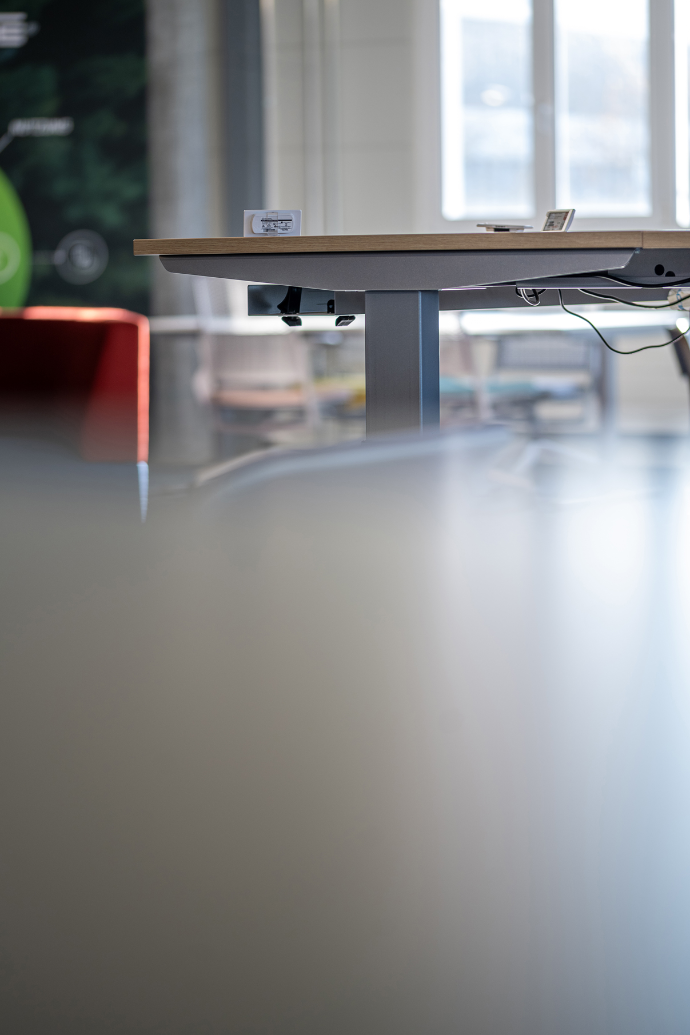
Sustainability at the expense of comfort and ergonomics?
Ergonomics is not a recent trend. For decades, workplaces have been consciously adapted to suit people.
Much of the office furniture that is now being given a second life as second-hand items was developed according to ergonomic principles. Height-adjustable desks, ergonomic office chairs, and functional storage solutions continue to work reliably even when used. Sustainable furnishing does not mean sacrificing comfort.
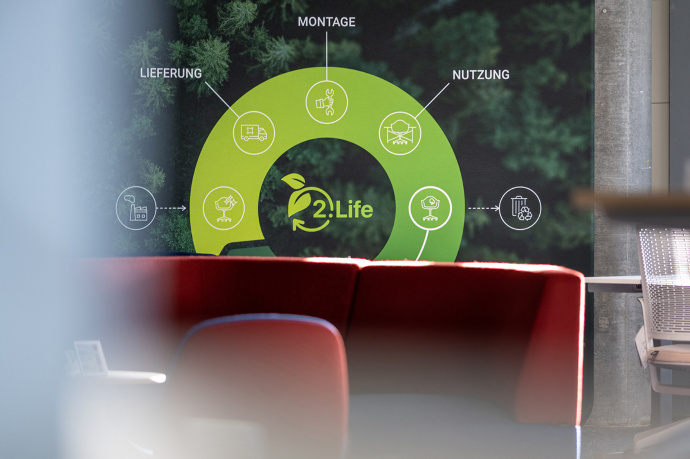
Second-hand furniture does not suit professional corporate appearances.
Used furniture is often associated with cost-cutting measures or temporary solutions. Particularly in representative areas, concerns arise regarding impact and image.
Not all secondhand furniture looks used. Much of it is in very good condition and appears high-quality, well-maintained, and timeless. The condition is what matters, not whether a piece of furniture is new or used.
In addition, sustainability is increasingly perceived as part of a modern corporate image. Companies that use existing resources consciously send a strong signal. Professionalism and Second Life are not mutually exclusive. They complement each other.
Conclusion: Buying a used car is not a stopgap solution, but a conscious decision.
Used furniture is predictable, high-quality, ergonomic, and representative. It enables sustainable office furnishings without compromising on function or design. Second Life does not mean sacrifice. It means responsibility, cost-effectiveness, and a conscious approach to existing values.
If you look more closely, you will see that the biggest mistakes often arise when you don't look closely enough.
See our current second-hand range for yourself and discover used office furniture in various conditions and quantities.